Following up on my earlier post about 16 resolutions, or thoughts to live by, inspired by this article at Brainpickings.org. Here is the seventh thought by Erich Fromm. from his 1956 book The Art of Loving.
Love is not a sentiment which can be easily indulged in by anyone, regardless of the level of maturity reached by him… [All] attempts for love are bound to fail, unless [one] tries most actively to develop [one’s] total personality, so as to achieve a productive orientation; …satisfaction in individual love cannot be attained without the capacity to love one’s neighbor, without true humility, courage, faith and discipline. In a culture in which these qualities are rare, the attainment of the capacity to love must remain a rare achievement.
[…]
There is hardly any activity, any enterprise, which is started with such tremendous hopes and expectations, and yet, which fails so regularly, as love.
The first step to take is to become aware that love is an art, just as living is an art; if we want to learn how to love we must proceed in the same way we have to proceed if we want to learn any other art, say music, painting, carpentry, or the art of medicine or engineering. What are the necessary steps in learning any art? The process of learning an art can be divided conveniently into two parts: one, the mastery of the theory; the other, the mastery of the practice. If I want to learn the art of medicine, I must first know the facts about the human body, and about various diseases. When I have all this theoretical knowledge, I am by no means competent in the art of medicine. I shall become a master in this art only after a great deal of practice, until eventually the results of my theoretical knowledge and the results of my practice are blended into one — my intuition, the essence of the mastery of any art. But, aside from learning the theory and practice, there is a third factor necessary to becoming a master in any art — the mastery of the art must be a matter of ultimate concern; there must be nothing else in the world more important than the art. This holds true for music, for medicine, for carpentry — and for love. And, maybe, here lies the answer to the question of why people in our culture try so rarely to learn this art, in spite of their obvious failures: in spite of the deep-seated craving for love, almost everything else is considered to be more important than love: success, prestige, money, power — almost all our energy is used for the learning of how to achieve these aims, and almost none to learn the art of loving.
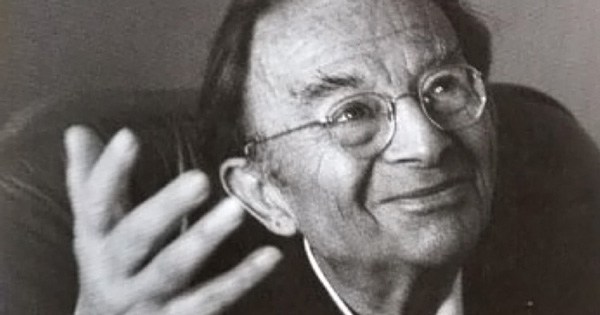
Erich Fromm (March 23, 1900–March 18, 1980) was a Jewish German psychologist, sociologist, and philosopher. He left Germany when the Nazis were in power to live in the USA, and also spent some time living and working in Mexico. Check out the Wikipedia article to learn more about him.
For me, these two paragraphs from the Wikipedia article were the most interesting and informative.
Fromm considered love to be an interpersonal creative capacity rather than an emotion, and he distinguished this creative capacity from what he considered to be various forms of narcissistic neuroses and sado-masochistic tendencies that are commonly held out as proof of “true love”. Indeed, Fromm viewed the experience of “falling in love” as evidence of one’s failure to understand the true nature of love, which he believed always had the common elements of care, responsibility, respect, and knowledge. Drawing from his knowledge of the Torah, Fromm pointed to the story of Jonah, who did not wish to save the residents of Nineveh from the consequences of their sin, as demonstrative of his belief that the qualities of care andresponsibility are generally absent from most human relationships. Fromm also asserted that few people in modern society had respect for the autonomy of their fellow human beings, much less the objective knowledge of what other people truly wanted and needed.
Fromm believed that freedom was an aspect of human nature that we either embrace or escape. He observed that embracing our freedom of will was healthy, whereas escaping freedom through the use of escape mechanisms was the root of psychological conflicts. Fromm outlined three of the most common escape mechanisms: automaton conformity, authoritarianism, and destructiveness. Automaton conformity is changing one’s ideal self to conform to a perception of society’s preferred type of personality, losing one’s true self in the process. Automaton conformity displaces the burden of choice from self to society. Authoritarianism is giving control of oneself to another. By submitting one’s freedom to someone else, this act removes the freedom of choice almost entirely. Lastly, destructiveness is any process which attempts to eliminate others or the world as a whole, all to escape freedom. Fromm said that “the destruction of the world is the last, almost desperate attempt to save myself from being crushed by it”.[3]

















 The Panama Adventure