Marañón is Spanish for cashew. I love cashew nuts but never thought much about how they grow. There are a lot of them in this area so I’m curious to know more about them.
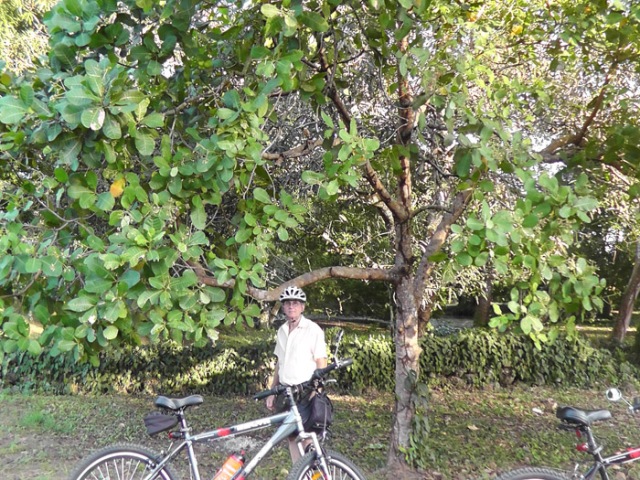
We first noticed a cashew tree when we were bike riding and stopped by the side of the road. We saw things on the tree that I thought must be cashews.
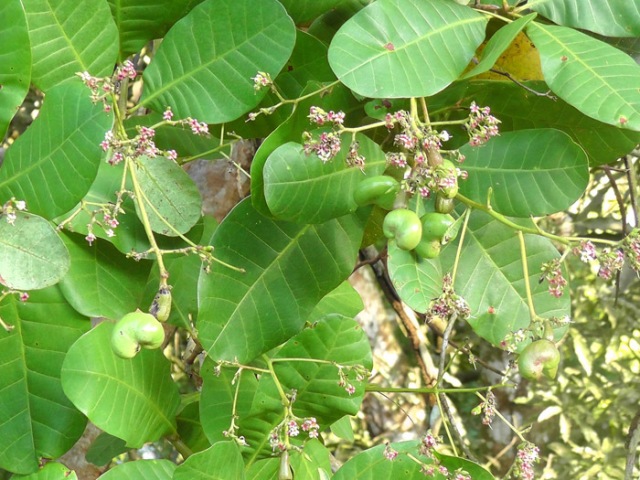
These are what we saw on the tree.
So, I went home and did a bit of research. What I found about cashew trees did indeed look like this tree. Once I knew what to look for, I started seeing cashew trees all over town!
Later, I saw a fruit at the produce market that reminded me of pictures I’d seen in my cashew research. What is it? Marañón. When I came home I looked at my jar of cashews from PriceMart and sure enough, “semillas de marañón”! Apparently semmilas (seeds) is the nuts, and marañón is the fruit.
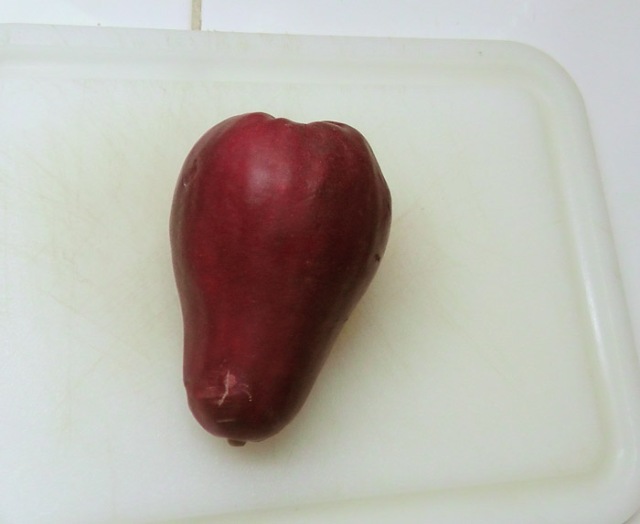
This is a marañón fruit
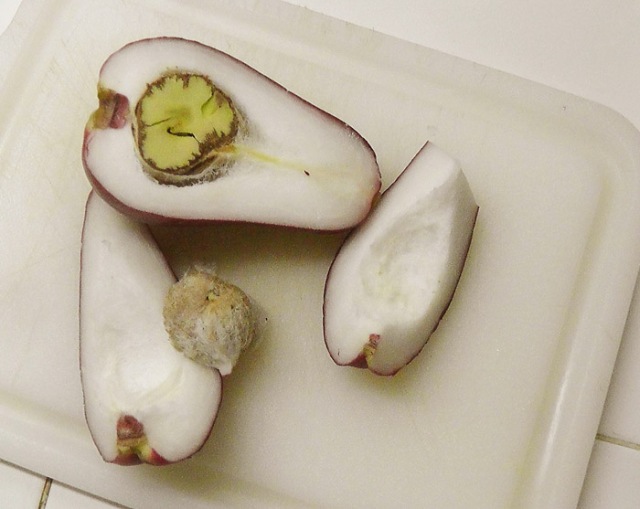
This is the fruit cut open. The flesh is very light and delicate, soft but not mushy, white, mildly sweet but without a distinctive flavor or much juice. The skin is soft and smooth, and the nut inside is very pretty (but I didn’t try to eat that part)
Meanwhile, there is a very pretty tree in our neighbor’s back yard just on the other side of our fence.
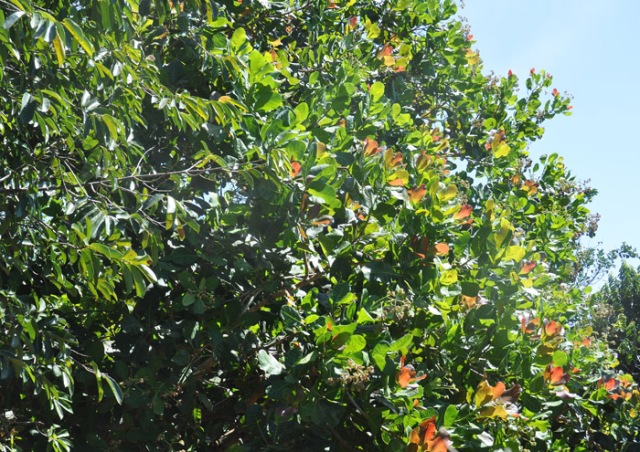
The neighbor’s tree, which has been flowering. I think the reddish leaves are pretty. One day I noticed it has a few cashews on it!
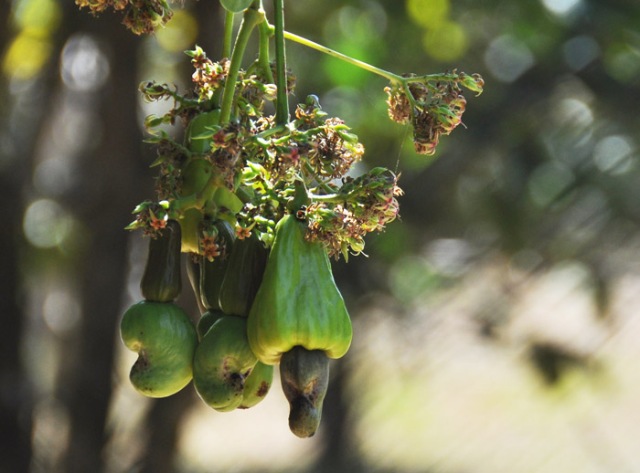
Later, I noticed that this cashew was developing a fruit with it.
A little time passes, and one evening we take a walk around the block instead of our usual route toward the neighborhood entrance.

Wow, what is this? a tree with red fruit like the fruit from the market!
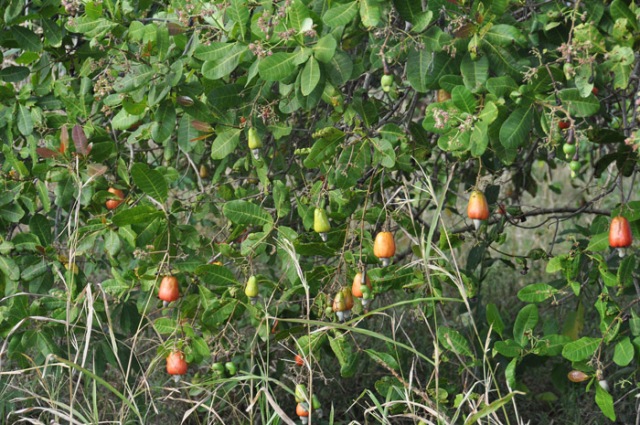
Definitely red fruit.
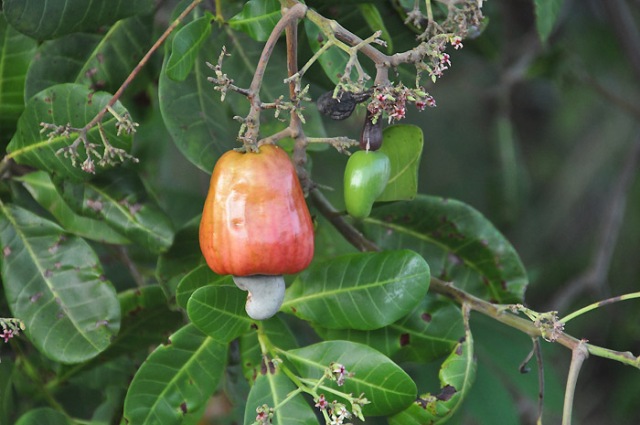 It’s a bit lighter color than the fruit I bought, and has the nut on the end (which apparently had been removed from the fruit I bought?)
Next, as we are leaving our neighborhood, I notice the cashew by the side of the road has developed fruit.
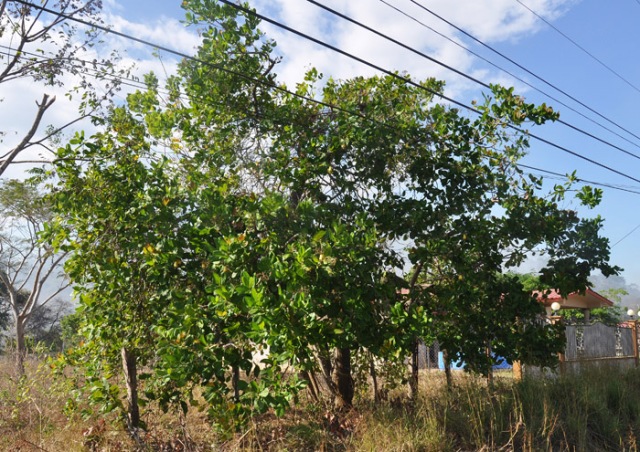
The fruit isn’t obvious at first glance, which is why sometimes it is nice to go walking. You notice more little things.
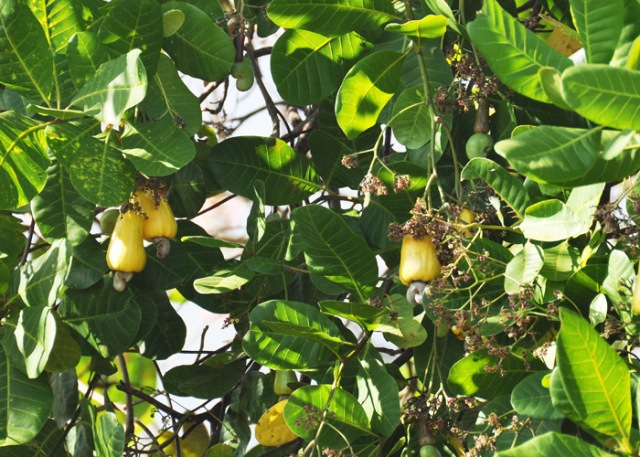
It definitely has yellow fruit! I noticed though that most of them are on the west side of the tree.
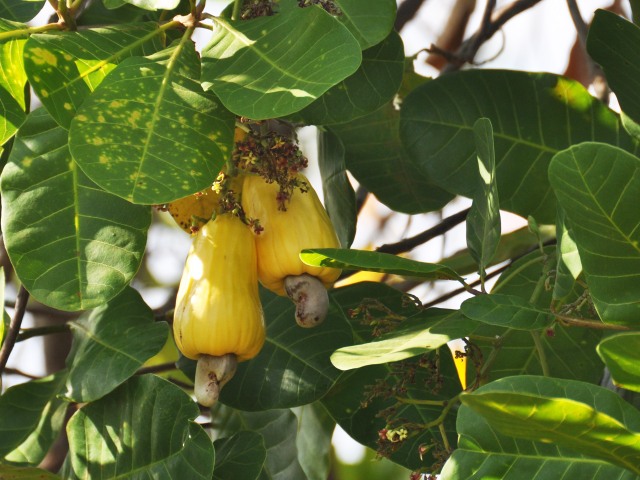
The fruits are quite pretty. They feel soft, almost waxy or oily to touch.
OK, back to cashews and marañón. My neighbor tells me that there are two kinds of fruit and only one is good to eat (the red one I bought). I am curious to get a red fruit from the tree down the street to see if it is the same, and to see if it has a pit inside.
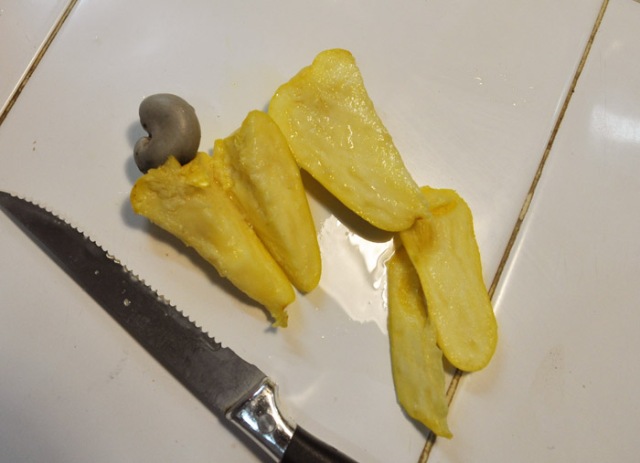
Curiosity overcame me and I brought one home. It did not have a nut or pit inside. It has an odd flavor, not bad, just odd, not especially sweet. The fruit is very light, not very juicy, but almost not edible either. It’s more like something you chew for flavor and then spit out the pulp. It wasn’t quite like chewing gum, but not like fruit either. It’s an odd thing and hard to describe.
From what I’ve read and observed, the nuts develop first and then the fruits grow later. The skin of the fruit is fragile and delicate, so it doesn’t transport well. This is why you don’t see these fruits outside of the areas where they grow. I also read that the nuts contain a substance in the skin that is very irritating, but the roasting process gets rid of the problem.
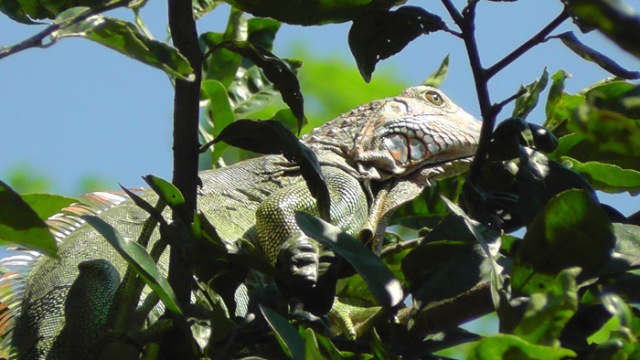
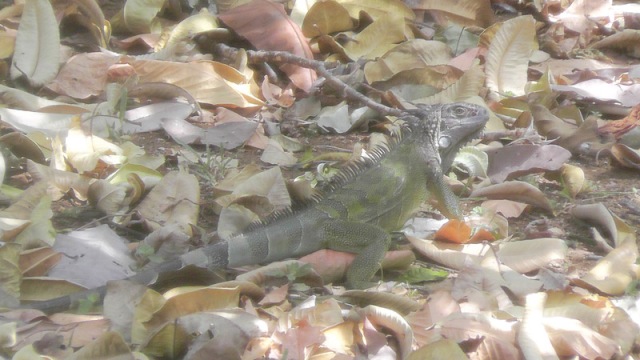
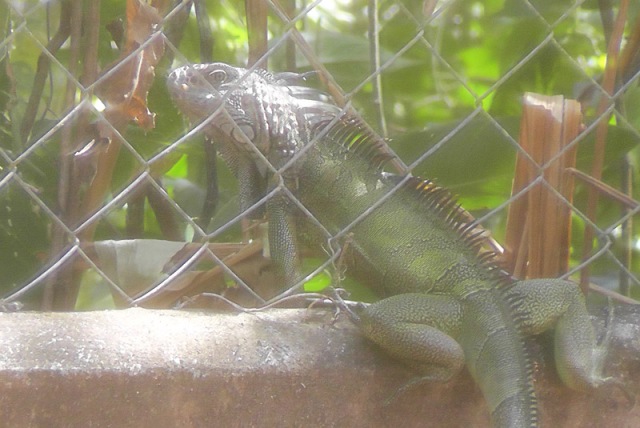
This is not a cashew. I figured I’d toss in a little surprise for those of you who hung in there until the end. We were eating lunch outdoors one day and this guy came through the fence and went up the limón tree. Joel got this shot, very lucky because shortly afterward he hid himself in the tree so well that neither of us had a clue where he went.
It sure is interesting living in a new place with so many new things to learn about!
0.000000
0.000000














 The Panama Adventure