Many people are looking for information on this subject, especially people who are considering a move to this area. Money was a big factor in our move and of course it is a concern for many others as well, especially with all the economic problems in the US.
We are in the city of David, Chiriqui Province, Republic of Panama. This is only our experience, our information. Other people do things differently, live in other areas, and make other choices so their costs will be different. Keep in mind that many professional Panamanians in our area (eg; teachers, nurses) make $500-600 a month, and many others live on much less than this. If you live like a Panamanian you can have a good life here on less money than in the US.
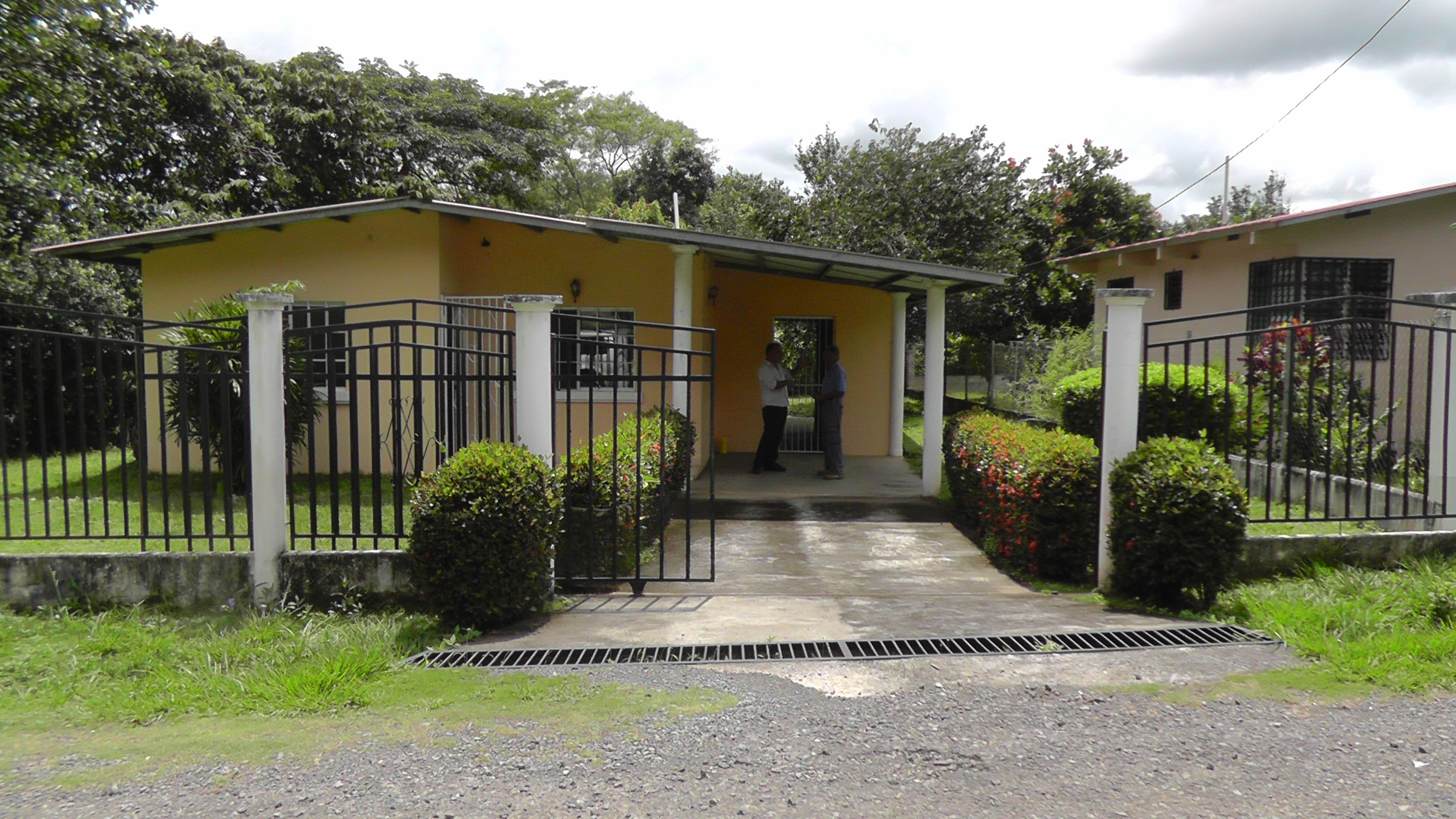
This is our house. I’m guessing it’s about 1000 square feet, 3 bedrooms, 2 bathrooms, living room, dining room, kitchen, the carport you see here, a laundry room behind it, and a good size patio behind that.
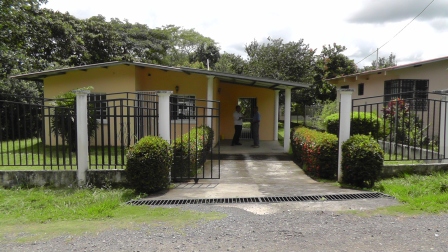 Our House
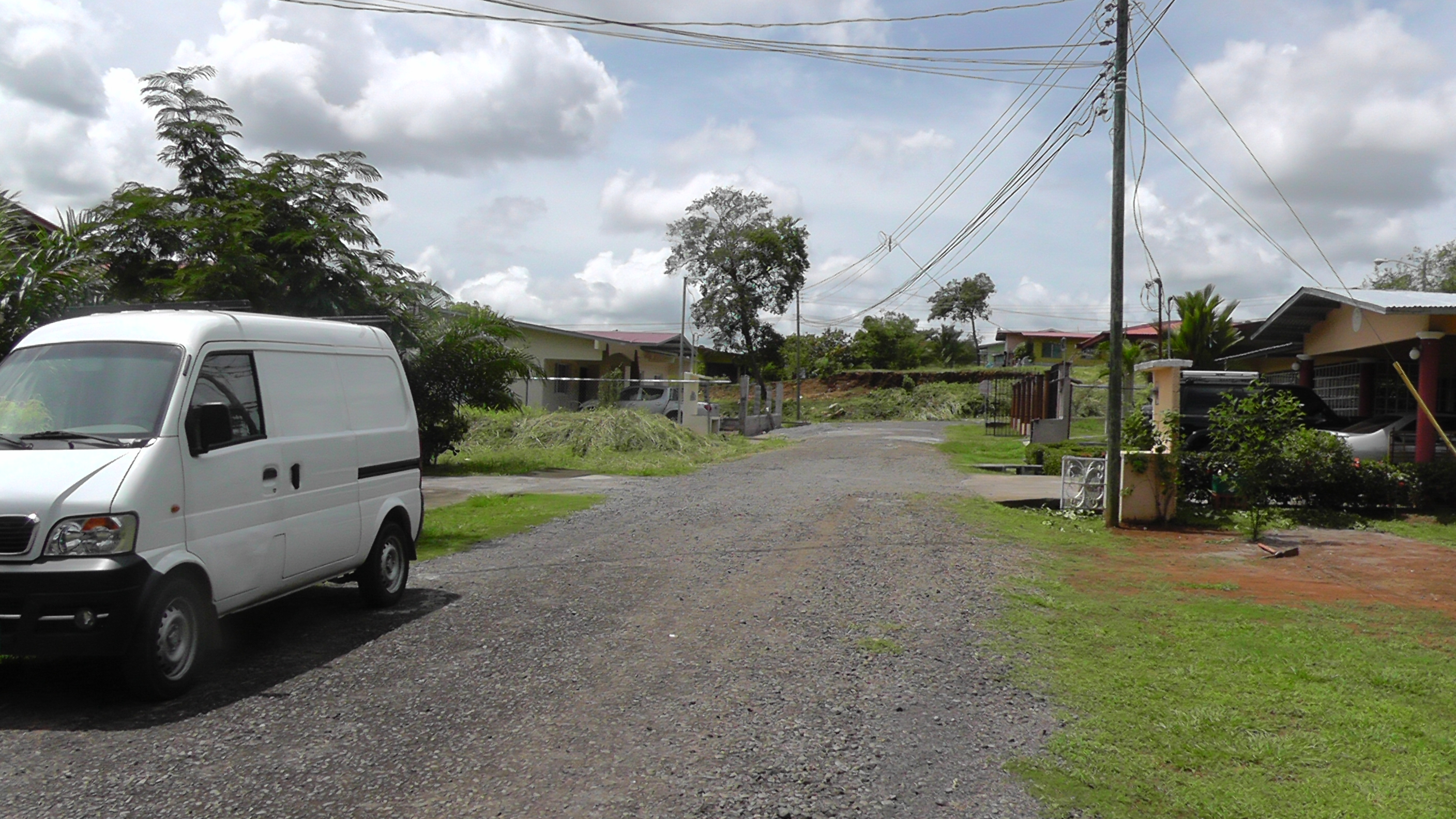
 Looking up our street.
This is our street, a nice quiet middle/upper class neighborhood with mostly professionals – teachers, lawyers, business people, tradesmen, etc. It is on the nicer side of town, 5 minutes from the Pan American Highway and an excellent shopping area. This neighborhood is considered desirable and very expensive by many of the locals.
Our rent is $385/month which includes water and trash pickup. The house was rented unfurnished (which means no appliances).
Electricity last month was $49.45 for 421 kWh which I think is about what we can expect monthly. We do not have air conditioning.
Cable – TV and mid range internet (about 5MB, not the fastest, but not the slowest, and it has worked out just fine) $53.52 / month
Gas for the kitchen – we buy it by the tank. It’s about $65 to buy a tank (you will probably want to have two) and $5.12 to refill it. A tank lasts us about a month. We cook almost everything from scratch and don’t eat out, and have an on demand water heater so we use a fair amount of gas.
Food – last month we spent $339.31 for two adults. This month we have spent $319 and there is a week to go in the month. But, this includes $30 of fish and about $30 of chicken, much of which is still in the freezer, and maybe $50 in bulk items from PriceMart. So far this month (about 3 weeks) we have spent $68.35 at the produce markets. This includes ALL our fruits and vegetables, and also some eggs, and corn for tortillas (I have only used a can opener once in the 4 months I have lived here). We have fresh fruit at every meal, and fresh veggies every day.
Food is a big variable. You can get almost everything you are used to in the US, but you will pay US prices and maybe more. You can get produce in the supermarket but you will pay a lot more, and it won’t be the wonderful quality of the markets. If you eat out, prices also vary widely. A Panamanian lunch at the corner hang out is maybe $3 – $4.50. If you go to a restaurant, it could be $6, or $10, or $20+ depending on where you go. Fast food is available but you will pay US prices and more. If you eat like a Panamanian you can keep your costs down a lot, and eat better and healthier food.
Cars – used cars are surprisingly expensive here. Major brands of new cars are readily available. We paid $5300 for a Hyundai Atos from another expat who was returning to the US. When I first got here I paid $4000 for a 97 Mazda 323. My friend’s mechanic sold me his wife’s car because he said he couldn’t find any other decent cars in my price range ($3-5K). Other people here have told me similar stories about expensive used cars. But, the insurance on the Mazda is about $95/year, and on the Atos (full coverage) about $550 for the year. Since I’ve been here, gas has ranged from $3.85 – $4.10 a gallon for 91 (which is the lower octane rating here).
If you want to save money, use public transportation. There is an excellent bus system that goes everywhere. A ride is maybe $.25 – $1.00 depending on where you go. Even an all day ride to Panama City is $18. Taxi’s are everywhere and inexpensive, maybe $1 – $3 in town. They charge more for more passengers, or extra packages and baggage, as well as for distance. Bicycles and walking are other very common forms of getting around. we have found biking easier here because drivers are used to sharing the roads with bikes and pedestrians, so they are very considerate.
Alcohol – Local beer is $.48/can (and really good!), less by the case at Pricemart – $.40/can. Rum (2 liters – decent local brand) $10.89 at Pricemart, maybe a couple dollars more in the supermarket. Seco (2 liters – local rum type product) $8.69 at Pricemart, again a bit more at the supermarket. You can get decent box wine, $2/box/liter, and good bottled wine for less than $5/bottle. There is a decent wine selection in the supermarket, and a very nice wine store in the nearby shopping center with a good selection and personal service to help you choose.
Entertainment – we spent $7 for two at the movie theater, evening showing. Another day it was only $5 for both of us. We didn’t buy snacks though, so not sure what they cost.
We found a tennis group, $25 each to join, $5 monthly dues. Tennis balls however are $8/can. If I understand correctly, golf is also available at the same location for $30/month.
We bought bicycles, $265 each for good bikes, 21 gears, shocks in the front. (I don’t know how this compares to the US).
Health Care – a visit to the doctor will cost $20 – $40 basic charge. A visit is as much time as you need. A visit to the dentist is maybe $30 for a cleaning or filling, more for other procedures. I am getting a crown for $250. I have found health care here much more affordable and the quality excellent. I was a nurse in the US, and I am very happy and thankful to be here. There are various options for health insurance but this is not a subject I’m qualified to talk about. We have decided to pay as we go.
>Also, keep in mind that that jubilado or pensionado discounts lower costs of many things even further, for those who qualify. More info HERE
Moving expenses – this is a one time expense, but people are understandably curious so I will give you my $.02 worth. This expense can also vary greatly. If you want to save money, move as little as possible. Come down here with whatever you can bring in suitcases. It’s cheaper to buy what you need here than move it. Do not bring a car. From what I understand it’s complicated and expensive, and older cars cost more than newer cars to import. If you want to move stuff that involves shipping, expect to pay thousands. If you want to move the entire household of stuff, you can rent a container so with enough money it is possible.
Getting settled – another one time expense. For us, I saw this unfurnished house that I really wanted, so I had to do some major shopping for appliances, beds, dishes, everything! But, this is not as difficult as it sounds. There is a large variety of options. You can get a little $100 stove, or a $900 stove with all the bells and whistles. I think decent mid range appliances are comparable to what they cost in the US, and you will see many familiar brands. I lived in Florida before, land of wealthy people where you can furnish your house with great second hand stuff. Here in Panama though, there is little used furniture and it’s expensive. New furniture is available all over town but it costs probably as much as new furniture in the US, though that is hard for me to say since I never bought new furniture. Or, it’s also possible to rent a furnished place. Some have everything down to the spoons and towels.
Whew! I think I have covered all the basics. Thanks for hanging in there to the end. If you see incorrect information, have suggestions, questions, or anything else please leave me a comment!












 The Panama Adventure